
AI 101 · Part 1 of 7
August 26, 2026 · 6 min read
By David Crush
What is AI, actually?
You have probably seen someone type a question into a box and get back a long, confident, human-sounding answer. Maybe it wrote a birthday poem, or explained a medical bill, or planned a trip. And maybe you wondered: what is actually doing that?
Here is the honest answer, without the jargon.
It's a very good guesser
The AI behind chat apps is a computer program that was shown an enormous amount of human writing — books, articles, websites, conversations. From all of that, it learned one skill extremely well: given some words, guess which words should come next.
That is really it. When you ask "What's a good side dish for roast chicken?", the program is not looking up an answer in a cookbook. It is producing, word by word, the kind of reply that would most plausibly follow your question, based on the patterns in everything it read.
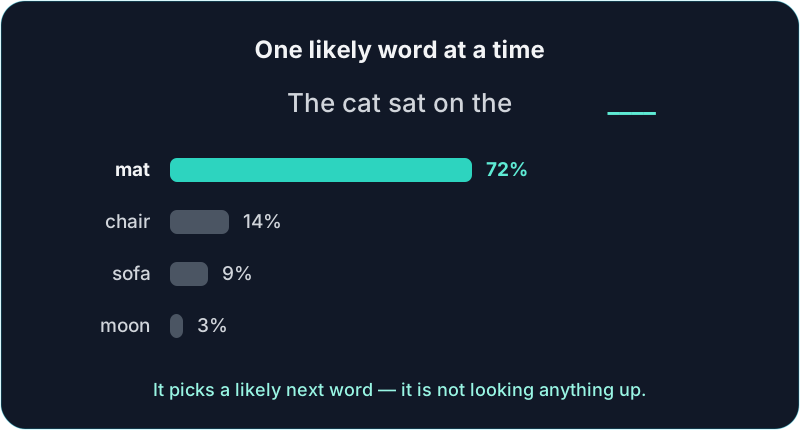
It turns out that guessing the next words this well looks like understanding. The answers are usually helpful, often genuinely insightful. But it helps to remember what is happening underneath: pattern-matching on a giant scale, not looking things up.
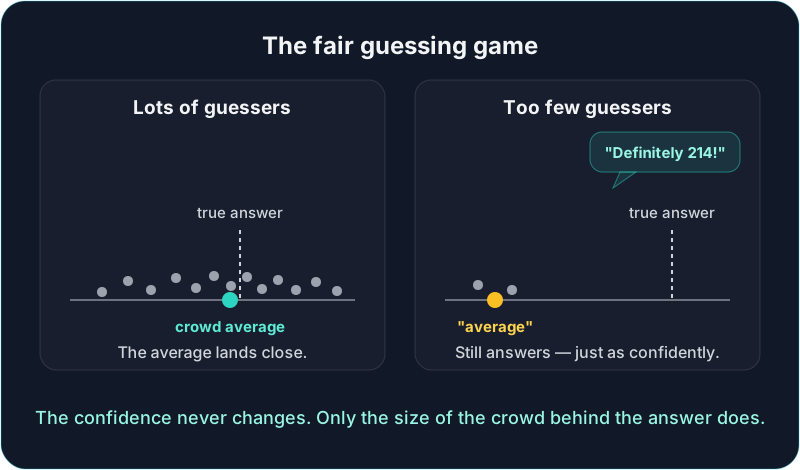
If you have ever played the guessing game at a fair — how many jellybeans in the jar, how much does the ox weigh — you already have a feel for why this works. Any one person's guess might be wildly off, but average the whole crowd's guesses and the result lands surprisingly close to the truth. An AI is that trick at enormous scale: it read millions of people's writing, and its answer behaves like the pooled guess of that entire crowd. That is why it is so often close to right.
Hold onto that picture, because it also predicts exactly how AI fails. When the crowd never said much about your particular question, there is almost nothing to pool — but the machine produces an "average" anyway, built from nearly nothing, delivered in the same confident voice. More on that in a moment.
Three things it is not:
- Not a search engine. Google finds pages other people wrote and shows them to you. An AI composes a brand-new answer every time — which means there is no page to check it against unless you go looking.
- Not a database of facts. There is no list of verified truths inside. It absorbed patterns from its reading, including any mistakes and disagreements that were in there.
- Not a person. It has no memory of you between conversations (unless the app adds that), no opinions of its own, and no idea whether what it just said is true. It also never gets tired of your questions — you cannot annoy it, and no question is too basic.
Why it sounds so human — and why that misleads
The program learned from human writing, so it writes like humans: warm, fluent, confident. When something talks like a knowledgeable friend, we instinctively trust it like one.
That instinct is the single biggest trap for new users. The AI sounds exactly as confident when it is wrong as when it is right. A wrong answer will not come with a stammer or a "well, I'm not sure, but…". It arrives in the same polished, assured tone as a correct one.
People in this field call a made-up answer a "hallucination" — you will see that word around. It just means the AI produced something that sounds right but is not. This is not the machine being broken or lying to you. It is the fair guessing game with too few guessers: an average pooled from almost nothing still comes out as a number. Making plausible text is the only thing it does; sometimes plausible and true are not the same thing.
What it is genuinely good at
Plenty, honestly. The sweet spot is work where you can judge the result yourself:
- Drafting — a first version of an email, a card message, a complaint letter. You read it, fix what is off, and send. Starting from something beats starting from nothing.
- Rewording — "make this shorter," "make this friendlier," "explain this like I'm new to it." It is excellent at saying the same thing a different way.
- Explaining — paste in a confusing paragraph from a lease, a form, or a manual and ask what it means in plain language. Then verify anything that matters before acting on it.
- Brainstorming — gift ideas, dinner ideas from what is in your fridge, names for a book club. Wrong answers cost you nothing here; you just skip them.
- Patient tutoring — ask the same question five different ways until it clicks. It never sighs.
Notice the pattern: in all of these, you are the judge of whether the result is good. The AI drafts; you decide.
The one rule
If you take a single sentence from this whole series, take this one:
Treat AI answers the way you would treat advice from a confident stranger at a party: often useful, worth hearing, and verified before you act on anything important.
Which leads to what not to use it for:
- Don't treat it as your only source for medical, legal, or financial decisions. It can help you understand terms and prepare questions — it is genuinely good at that. But confirm with a professional or an official source before acting.
- Don't trust facts you won't check. Dates, dosages, prices, laws, whether a business is open, whether a quote is real. If being wrong would cost you money, health, or embarrassment, verify it.
- Don't type in secrets. Passwords, full financial details, other people's private information. What you type is processed by computers run by companies — a topic that gets its own part later in this series.
Try it
The best way to make this concrete is to try something where wrong answers are harmless. Ask an AI to plan a week of dinners around foods you like. Ask it to explain how a mortgage works using a lemonade-stand analogy. Ask it the question you have always felt was too basic to ask anyone.
You will see the strengths and, sooner or later, the weaknesses — and after this series, you will recognize both when they happen.
Next in the series: what to actually use AI for day to day — with examples worth stealing. Until then, the series overview has the full roadmap.
Ethyx is in closed testing with an access code today. Everything in this post applies to any AI chat app, not just ours.
Send this to someone who asked what AI is.
You do not need Ethyx — or any particular product — for this series to be useful.